What Is the Difference Between Generative AI and Traditional AI?
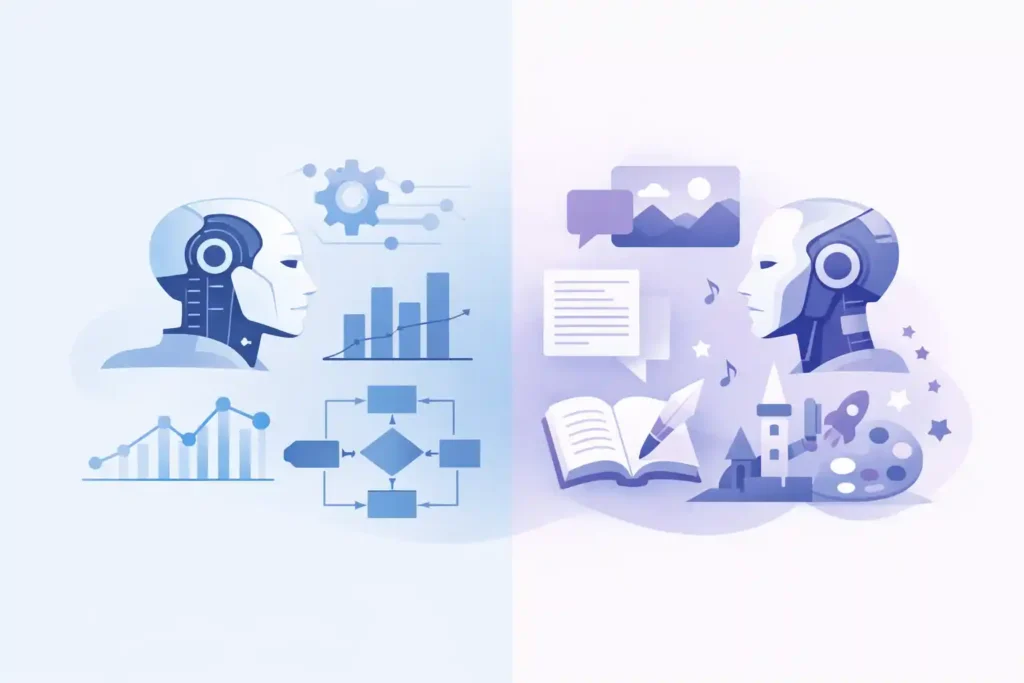
These days, the word AI is heard everywhere.Some people say AI is writing content, some say AI is making decisions, and some say AI will take jobs. But the truth is, not all AI is the same. The biggest confusion is this:What is the difference between generative AI and traditional AI? Many people think both are the same.But the way they work, think, and give output is very different. In this blog, I will explain this difference in very simple words.No technical language.Just normal examples, like we are talking. Read Also : AI Agents for Real Estate: Automate Leads & Closings Why People Get Confused Between Generative AI and Traditional AI First, it is important to understand why this confusion happens. The reason is simple: But the similarity ends here. To understand the difference between traditional AI vs generative AI, we must understand both separately. What Is Traditional AI? (Simple Explanation) Traditional AI is the type of AI that works on rules, patterns, and predefined logic. Its main work is: Traditional AI does not create anything new.It only works based on what it is trained to do. That is why many people also call it rule-based AI systems. How Traditional AI Works How traditional AI works – step by step The working process of traditional AI is very straightforward: In this process, AI: That is why traditional AI is placed in the category of data-driven AI models. Examples of Traditional AI Examples of traditional AI you see in daily life You are already using traditional AI, maybe without noticing: In all these cases, AI follows a pattern.It does not create new content, it only makes decisions. What Is Generative AI? (Simple Explanation) Now let’s talk about generative AI. Generative AI is the type of AI that can create new content. Content means: This is where the biggest difference begins. Generative AI does not only make decisions.It creates output that did not exist before. That is why it is also called content-generating AI. How Generative AI Works How generative AI works in simple words The process of generative AI is a little different: The rules are not fixed.The AI responds based on probability and context. That is why sometimes the output can be unpredictable. Examples of Generative AI Examples of generative AI that many people now know Generative AI examples are now very popular: Traditional AI could never do these things. Generative AI vs Traditional AI: Core Difference Now let’s talk directly. Generative AI vs traditional AI – main difference The simplest comparison is this: Traditional AI says:“This is right or wrong.” Generative AI says:“Let me create something new.” This one line clearly explains what is the difference between generative AI and traditional AI. Traditional AI vs Generative AI in Decision Making Also Traditional AI vs generative AI – decision approach Traditional AI: Generative AI: That is why their use cases are different. Machine Learning vs Generative Models (Short Understanding) Traditional AI mostly uses machine learning models that focus on classification and prediction. Generative AI uses generative models that focus on creation. This difference clears a lot of confusion. Where Traditional AI Is Still Better Generative AI is not best everywhere. Traditional AI is better when: That is why traditional AI is still strong in areas like banking and healthcare. Where Generative AI Is Clearly Better Now let’s be direct. Generative AI is not perfect everywhere, but in some areas it is clearly ahead of traditional AI. Generative AI is better when: Traditional AI struggles here because it is built for decisions, not creation. This is where what is the difference between generative AI and traditional AI becomes even clearer. Generative AI vs Traditional AI: Use Case Comparison Generative AI vs traditional AI – real-life use Let’s break it down simply. Traditional AI is used when: Generative AI is used when: Both have different roles, and they do not replace each other. Examples of Generative AI vs Examples of Traditional AI Side-by-side simple examples Examples of traditional AI: Examples of generative AI: This clearly shows that traditional AI vs generative AI is used in very different ways. How Traditional AI and Generative AI Learn Differently How traditional AI works (learning style) Traditional AI: That is why traditional AI is stable but not flexible. How generative AI works (learning style) Generative AI: It has more creativity, but sometimes accuracy can be lower. Control vs Creativity: The Real Difference This is an important point that many people miss. Traditional AI = ControlGenerative AI = Creativity Traditional AI: Generative AI: Understanding this balance is very important. Role of Data in Both AI Types Data is important for both, but it is used differently. Traditional AI: Generative AI: That is why generative AI systems are heavier. AI Decision-Making Systems: Where Each Fits Traditional AI works best when: Generative AI works best when: Here, the difference between machine learning vs generative models becomes practical. Limitations of Traditional AI Traditional AI is powerful, but it has limits: That is why traditional AI alone is not enough for modern problems. Limitations of Generative AI Generative AI is also not perfect: That is why it should not be used blindly. So, Which One Should You Use? This question comes to everyone’s mind. The answer is simple: Both have different roles.They are not competitors, they work together. Future View: Will Generative AI Replace Traditional AI? Short answer: No Long answer:Generative AI will not replace traditional AI. It will work with it. Future systems will mostly be hybrid: This is how future AI will be built. Final Summary: Difference in One Simple Line In one line: Traditional AI decides.Generative AI creates. This clearly explains what is the difference between generative AI and traditional AI. Conclusion Today, understanding AI is important.But understanding it the right way is even more important. Both traditional AI and generative AI are powerful, but their roles are different.If this difference is not clear, confusion will remain. Next time you hear the word AI, pause and think: That clarity is enough. FAQs