
convertfilepro.com

Tech Trends & Innovations

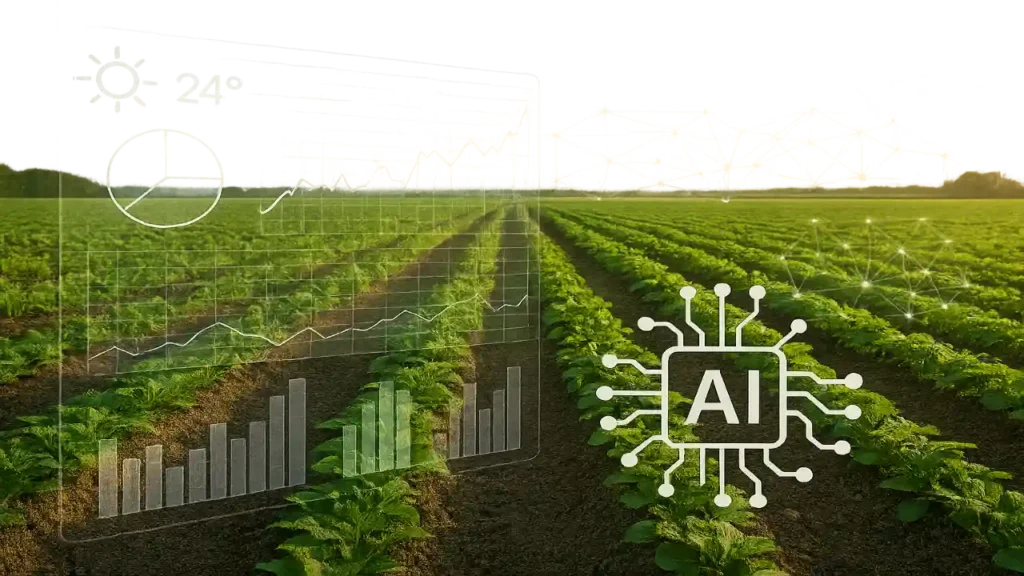
How AI works in agritech industry essay showing smart farming and data driven agriculture
AI & Machine Learning, Tech Trends & Innovations, Tools

How AI Works in the Agritech Industry: A Step-by-Step Essay for Beginners

Agriculture has always been about experience, instincts, and hard work. For generations, farmers relied on weather patterns, soil feel, and seasonal knowledge passed down over time. But things are changing now. Slowly, quietly, and very practically, technology has started entering farms. And at the center of this change is artificial intelligence. This how ai works in agritech industry essay is written for beginners—students, curious readers, or anyone who wants to understand the topic without complex technical language. I’ll walk you through how AI actually works in agriculture, step by step, just like explaining it to a friend. No hype. No promotion. Just clarity. Read Also : AI Agents for Real Estate: Automate Leads & Closings Understanding Artificial Intelligence in Agriculture Before diving into how AI works, it’s important to understand what artificial intelligence really means in farming. Artificial intelligence in agriculture simply refers to machines and software that can analyze data, learn from it, and help farmers make better decisions. It’s not about robots replacing farmers. It’s about assisting them. AI systems look at large amounts of information—like soil data, weather reports, crop images—and then suggest or automate actions based on patterns. So when people talk about AI technology in farming, they’re talking about smart decision-making tools, not science fiction. Why the Agritech Industry Needs AI Agriculture today faces many real problems. Farmers deal with unpredictable weather, rising costs, crop diseases, water shortages, and growing food demand. Managing all this manually is extremely difficult. This is where the role of AI in agritech becomes important. AI helps by: This essay on how AI works in the agritech industry focuses on solving these practical challenges, not just explaining technology. Step 1: Data Collection – The Foundation of AI in Agritech Every AI system starts with data. Without data, AI cannot work. In agriculture, data comes from many sources: This raw data is constantly collected from the field. It might look simple, but this step is the backbone of how AI is used in agriculture. Without accurate data, even the smartest AI system becomes useless. Step 2: Data Processing and Cleaning Once data is collected, it’s usually messy. Some readings may be incorrect. Some information may be missing. AI systems first clean and organize this data so it can be understood properly. This step is quiet but critical. In this phase, AI technology in farming: Many people skip this part, but in reality, this is where most of the work happens Step 3: Machine Learning – Teaching AI to Think Now comes the part where AI starts “learning.” Machine learning allows AI systems to study past data and identify patterns. For example, AI can learn: This learning process improves over time. The more data AI gets, the better it becomes. This is a core concept in every how ai works in agritech industry essay, because learning from data is what makes AI powerful. How AI Is Used in Agriculture for Crop Monitoring AI-Based Crop Health Analysis One of the most common AI applications in agritech is crop monitoring. Using images from drones or cameras, AI systems analyze crop health by detecting color changes, leaf damage, or unusual patterns. This helps farmers: Instead of walking through large fields manually, farmers can rely on AI insights. Early Disease and Pest Detection Crop diseases spread fast. By the time symptoms are visible to the human eye, damage may already be done. AI systems can detect tiny signs of disease early using image recognition. This allows timely action. This practical use of artificial intelligence in agriculture saves both crops and money. How AI Works in Agritech for Soil Management Healthy soil is the base of farming. AI tools analyze soil data to understand: Based on this, AI recommends: This is a simple but powerful example of how AI is used in agriculture to support better planning. AI Technology in Farming for Precision Agriculture Precision agriculture is one of the strongest outcomes of AI adoption. Instead of treating an entire field the same way, AI allows farmers to manage small sections differently. For example: This reduces waste and increases efficiency. That’s why the role of AI in agritech is growing rapidly in modern farming systems. How AI Helps in Irrigation Management Water is one of the most limited resources in agriculture. AI systems analyze weather forecasts, soil moisture data, and crop needs to decide: This avoids overwatering and underwatering. In many regions, AI technology in farming has helped reduce water usage while improving crop health at the same time. AI Applications in Agritech for Yield Prediction Farmers always want to know how much they will harvest. AI models use historical data, weather patterns, and current crop conditions to predict yield. These predictions help farmers: This predictive ability is a major part of how AI works in the agritech industry in real life. How AI Supports Decision-Making in Agriculture AI does not replace human judgment. It supports it. Farmers still make final decisions, but AI provides insights that are difficult to calculate manually. For example: This collaboration between human experience and AI intelligence defines the future of artificial intelligence in agriculture. Challenges of Using AI in Agritech Industry While AI has many benefits, it also comes with challenges. Some common issues include: A balanced how ai works in agritech industry essay must mention these challenges honestly. AI is helpful, but it’s not a magic solution. Future Scope of AI Technology in Farming The future of AI in agriculture looks practical, not dramatic. In the coming years, AI systems will become: We may see better climate adaptation tools and smarter resource management. The goal is not automation for the sake of technology, but sustainability and food security. Why Understanding How AI Works in Agritech Matters Understanding how AI works helps people: This essay on how AI works in the agritech industry aims to simplify the topic so that readers can form their own opinions. Knowledge matters more than buzzwords. Conclusion: A Practical View of AI in Agritech To summarize, AI in agriculture is

"Modern air purifier showing airflow directions inside a living room, explaining how air purifier works in a simple visual way.
Tech Trends & Innovations

How Air Purifiers Really Work (With Examples): A Simple Breakdown for 2025

Honestly Friends, in 2025 air purifiers have become a normal household item, but people still have the same old confusion — “how air purifier works exactly?” Sometimes I feel we use so much technology daily, but we don’t even know the basic logic behind it. Like everyone knows their phone has a good camera, but what the sensor actually does… no idea. Same with air purifiers. We just turn it ON, the air feels a little lighter, and that’s it. But what happens inside, nobody explains properly. And online content feels too technical, almost robotic. That’s why this blog is written in a simple, human way, like how you and I talk while having tea. Let’s see step-by-step in simple language how the air travels inside a purifier. This whole blog will explain the focus on how air purifier works. Read Also : How AI Is Changing the World in 2025: Daily Examples How Air Purifier Works — A Simple Breakdown If I say it in one line, an air purifier follows a simple cycle: air goes inside → passes through filters → dust, smoke, and allergens get removed → clean air comes out. That’s it. But behind this, there is a full airflow system that pulls air, maintains pressure, and spreads it evenly. This whole process is so smooth that we don’t even feel the machine pulling air. That’s the real beauty. The logic sounds simple, but when you understand the filters inside, you see that each layer has its own job. And this is why people often ask, “how does an air purifier actually work?” The simple answer is — it’s the teamwork of filters. Air Purifier Working Principle — All About Airflow and Filters The working principle of an air purifier is based on one thing: pulling air strongly and cleaning it through multiple layers. The fan does this job. The fan pulls air inside and sends it into the filter section where 2–4 layers are present. Each layer catches a different type of pollutant. At the end, clean air comes out. You can compare it to RO water filters. RO filters water and an air purifier filters air. The only difference is that one uses water pressure and the other uses air pressure. Types of Air Filters — What They Clean This part is important because this decides whether your purifier is really useful or just moving air. And here the second common question gets answered too — “what does an air purifier remove?” HEPA Filter — The Heart of an Air Purifier HEPA filters catch tiny particles like PM2.5, pollen, dust, and pet hair. This filter can stop particles as small as 0.3 microns. That is around 1/100 the thickness of a human hair. Because of this filter, people trust air purifiers for home use. It is tested and reliable. Activated Carbon Filter — Removes Smell and Gas If your home has cooking smell, smoke, or paint smell, this filter helps. It absorbs smells and gas molecules. It works like a sponge that holds gases inside. Pre-Filter — Small but Useful A pre-filter is a simple mesh that blocks hair, big dust particles, and pet fur. This protects the HEPA filter and increases its life. It works like the first guard standing at the gate. UV and Ionic Filters (Optional) Some purifiers have UV light that helps kill bacteria and viruses. Ionic filters release ions. But these features are optional and not available in every model. How Does an Air Purifier Actually Work? — Real-Life Example Let’s understand with a simple example. Your room has dust, pollution, and maybe kitchen smell too. You turn ON the purifier. Now what happens? First, the fan pulls air inside the machine. The pre-filter stops big dust. Then the HEPA filter removes PM2.5 and tiny dust. Next, the carbon filter absorbs smells and gases. Finally, the purifier releases clean air. This cycle keeps repeating until the room’s air becomes clean. This is the basic air purifier working principle. Do Air Purifiers Really Make a Difference? Yes, they do. But in a realistic way. It’s not like turning ON the purifier will suddenly make your room feel like fresh mountain air. But in 10–20 minutes, you feel breathing becomes easier. The heaviness in the room reduces. Eye irritation goes down. Allergies reduce. A purifier just cleans air, it doesn’t do magic. But if used regularly, the long-term effect is very good. People with allergies notice this quickly. Air Purifier Airflow System — How It Works Airflow means controlled movement of air. If the purifier does not pull air at the right speed, the filters won’t work well. A strong fan means the room gets purified faster. That’s why CADR value matters. High airflow = fast cleaning. If the room is big and the purifier is small, the machine will struggle all day. So the airflow system must match the room size. Air Purifier Efficiency — How Effective It Is Efficiency depends on: A good purifier shows difference in 15–30 minutes. If filters are dirty, efficiency becomes half. That’s why cleaning and replacing filters is important. Many people ignore this and then say the purifier doesn’t work. How to Choose the Right Air Purifier — Most Important Part This part is useful because most people make mistakes while buying. Check Room Size The purifier’s CADR should match the room size. Don’t use a small purifier in a big room. HEPA Filter is a Must If there is no HEPA filter, don’t buy it. Carbon Filter If Smell Is More For cooking smell, smoke, or pet smell, carbon filter is important. Check Noise Level At night, you need peace, not extra noise. Lower noise is better. Maintenance Cost Filters should be affordable. Otherwise, long-term cost goes high. Conclusion — Air Purifier Is Simple, You Just Need to Understand If you ask in one simple line how air purifier works, the answer is: it pulls air, filters it, and releases clean air. But the system behind this is

"Illustration of Information Communication Technology (ICT) showing interconnected devices like laptops, smartphones, tablets, servers, and cloud icons with data streams, glowing network nodes, and futuristic digital interface elements.
AI & Machine Learning, Tech Trends & Innovations

What Is Information Communication Technology? A Complete Beginner-Friendly Guide

Have you ever noticed how much technology we use every single day without thinking?Morning phone check, WhatsApp good morning, opening the laptop, scrolling Instagram, searching something on Google… and we don’t even realize that all this belongs to one big concept: what is the information communication technology. It looks like a simple question, but its answer is actually deep and interesting. And honestly, if you understand the real meaning of ICT, you will understand the whole game of technology. In this guide, I am explaining everything in a beginner-friendly way — just like I explain things to a friend while having tea. So let’s start. Read Also : AI vs Humans: Skills You Must Learn to Stay Relevant in the AI Era What Is Information Communication Technology? (Human-Friendly Explanation) The simple answer: Information Communication Technology (ICT) includes all the technologies that help to process, store, transmit, and share information. It is an umbrella term that includes: Meaning: Understanding this concept is important because it is the backbone of the digital world. Understanding ICT in simple words: Definition of Information and Communication Technology Textbook definition:“ICT refers to the technology systems used to manage, access, transmit, and communicate information.” But in simple human words:ICT is everything that makes communication fast, digital, and smart. Key points from the definition: Meaning of ICT (Easy Breakdown) Many people get confused about the meaning of ICT.Simple answer → ICT means Information and Communications Technology. Its main purpose: More simple meaning: What ICT Stands For (Basic Concept) Common question in exams, blogs, and interviews:What does ICT stand for?Answer: Information and Communications Technology This term became popular in the 1990s when computers and telecom started coming together. Why this term matters: Types of ICT Systems People think ICT systems mean only computers.But the scope is much bigger. Major types of ICT systems: Short explanation 1. Communication SystemsSystems that exchange messages — like email, chat apps, VoIP, and video conferencing. 2. Computing SystemsSystems that process information — laptops, PCs, and servers. 3. Data Management SystemsSystems that store, retrieve, and secure data — databases and data centers. 4. Network SystemsSystems that connect devices — routers, switches, LAN, and WAN. 5. Internet & Cloud SystemsSystems that offer online access and storage — cloud apps and hosting tools. 6. Telecommunication SystemsMobile networks, telephone lines, and satellite systems. 7. Multimedia SystemsAudio, video, and graphics — all part of ICT. ICT Tools and Examples (Very Important Section) When someone says “ICT tools,” they mean the digital tools used to share or process information. Most popular ICT tools: Short explanation: Digital Communication Technologies (Modern Examples) Today, almost 95% of communication happens through digital tools.All thanks to ICT. Most-used digital communication technologies: Why these technologies matter: Computer and Communication Technology Computer technology + communication technology = core of ICT This includes: Short explanation: Advantages of ICT Without ICT, business, schools, hospitals, banking — nothing would work today. Main advantages: Impact of ICT on Society ICT has changed society in both positive and negative ways. Positive impact: Negative impact: Future of ICT (Why It Matters Now More Than Ever) In the coming years, ICT will become even more powerful.AI, IoT, automation, 5G, cloud — all are part of ICT’s future. Future changes expected: Conclusion (Friendly Closing) Now when someone asks “what is the information communication technology”, you can explain easily — because ICT is the combination of technologies that make our life fast, connected, and digital. Whether it is business, school, office, or personal life — nothing is possible without ICT. And as technology grows, ICT will keep becoming more important. FAQs Sources: https://www.intertek.com/ict/https://ccitraining.edu/blog/what-is-ict-a-deep-dive-into-information-and-communication-technology/https://en.wikipedia.org/wiki/Information_and_communications_technologyhttps://online.nccu.edu/blog/what-is-information-communications-technology/https://csrc.nist.gov/glossary/term/information_and_communications_technology

What is an algorithm in computer explained with examples
AI & Machine Learning, Tech Trends & Innovations

What is an Algorithm in Computer? (Explained in Simple Words with Examples)

Many of you might have heard the name of the algorithm. Let’s say you stand at a shop where there are only shoes and you think about how good the shoes are, then you go to that shop and ask about their price also but for some reason, you did not like it or the price did not seem good, it could be any reason. Then you come home and search for the same shoes on your mobile and see what their price and quality are, and compare them. After doing all this, you keep the phone aside, and then after some time or the next day, you see similar ads. These ads start appearing on your phone, whether you are using social media or using YouTube; in fact, if you are on any e-commerce site or any educational site, you are shown similar ads there too. So overall, this whole game is the work of algorithms. If you search for something on your phone, then you are shown ads or videos, posts related to that. Read Also : What is the Latest Invention in Science and Technology Today How technical it sounds to hear the algorithm, but it is a part of our daily routine, whether you want to shortlist a list or you have to search for contacts on the phone. In this blog, I will explain to you in very simple language what an algorithm is, how it works, and what is its importance in programming. No heavy theory, just real-life examples, easy explanations, and step-by-step guides – so that it becomes clear to you that this ghost named “algorithm” is not as complex as it appears. What is an Algorithm? (Simple Definition) First of all let us try to understand the basics of what an algorithm is; an algorithm is basically a set of step-by-step instructions that are created to solve any problem. It is just like you have to go through the process of making something. If you are making a vegetable, then a process is followed for making it. First, the vegetable is cut, then that vegetable is washed with water, then it is put in a pan, then it is cooked for a while, then spices are added, and water is added at the end. So, if it is cooked properly, then this is the process of making vegetables. Just like that, an algorithm follows a process to perform any task. Similarly, something similar happens in the computer world as well; you can use your mobile apps or social media that I use, like YouTube, Instagram, or Google Maps; there are several algorithms working behind them. For every small activity, a logic or rule set is made, which is called an algorithm. Its job is to break the problem and define each step logically – so that the computer can work without getting confused. The computer does not think on its own; everything has to be explained to it – and this way of explaining is an algorithm. Real-Life Examples of Algorithms Let us understand this with a real-life example, like you are making tea, then first you heat the water, secondly you add tea leaves, thirdly you add milk and sugar, and finally, how to serve the tea. This is a complete process, and this process itself is an algorithm. An algorithm does not mean only technical or computer or coding; it is everywhere. Whenever you do any work without skipping any step, without any logic, that process also follows an algorithm. We try to explain with some simple and interesting examples. Like we just saw about desire, we followed its process. Finding a name in phone contacts Just like when you are searching for any contact in your phone, you also follow an algorithm there, like you press your A key later and all the names starting with A start appearing on your screen, absolutely systematically. This is called a search algorithm because it refines the result and shows it to you. Books Arranging alphabetically Just like when you have to arrange books alphabetically, you keep books in the book library in the order from A to Z, and there you also follow a process as to which book will come first and which one later. This is also an example of a type of shorting algorithm, and the same logic is used in computer programming also. These examples show you that an algorithm is not rocket science – it is just a game of common sense and logic. You are using algorithms consciously or unconsciously every day. How Algorithms Work in Computers Till now we have discussed what an algorithm is, and we have understood it through a real-life example. Now, let us talk about how all this works inside a computer. If we talk about a computer, the computer does not think on its own. It has to be told a group of instructions for every task. And the ordered set of those instructions is an algorithm. Imagine you opened a calculator app and typed 5 + 3. Now what will the computer do? He will follow an algorithm that performs these steps: Read the first input (5 and 3) Simple, right? But all this happens so fast and efficiently that you hardly even realize it. Another example: Login system Think if you log in to a website or app and you are asked to enter your username and password, there too an algorithm that works. Looped Algorithms Sometimes what happens is that the computer has to do a task repeatedly – ​​check 100 items from a list. Then the algorithm uses a loop like: “Repeat until all the items are checked.” This saves time and also makes the process efficient. In short, every work of the computer is done by an algorithm – be it your Google search, a product suggestion on Amazon, or a recommended video on YouTube.  Types of Algorithms (Beginner-Friendly Explanation)  Types of Algorithms

Latest web development technology in 2025 with AI, Web3, and modern frameworks
Digital Marketing & Social Media, Tech Trends & Innovations

What is the Latest Web Development Technology?

Introduction Earlier, making a website was just HTML, CSS, and JavaScript. But now everything has changed, and with the era of AI has come, everything has changed. Nowadays, internet lightning has become incredibly fast; people expect websites to load quickly, run smoothly, and function properly on mobile devices. This can be achieved by utilizing new tools and technologies in web development. Now, every month, some new updates keep coming, and something new keeps happening in the world of technology. In this blog, we will explore the web development scene in 2025, including the latest technologies that are gaining popularity and how these new tools are making websites faster, smarter, and more secure. Read Also: Top 10 Free Digital Marketing Tools Every Beginner Should Use in 2025 The Evolution of Web Development Talking about the earlier times, the websites used to be very simple, but now they have become smart, or you can say that many versions have come. Web 1.0 (Static Era): Websites made with HTML/CSS only. No interactivity. Web 2.0 (Dynamic & Social): Use of JavaScript, PHP, CMS (like WordPress). Blogs, social media, and user-generated content took shape. Web 3.0 (Intelligent Web): The time of AI, blockchain, real-time data, and personalized UX. Focus on performance, security, and automation. Today, websites are not just an online presence; they have become powerful tools — fast, responsive, and user-focused. Top Web Development Technologies in 2025 By 2025, new changes are happening in web development, and new tools and trends have become advanced. We are sharing with you a list of some ideas in which you can see how the tools have made it advanced. Jamstack Architecture: A Modern way to create fast, secure, and scalable websites. WebAssembly (Wasm): For running high-performance code in the browser. AI Tools: For smart coding assistants and personalized content generation. Headless CMS (like Strapi): Flexible content management without design limits. PWAs (Progressive Web Apps): App-like experience, without an app store. Motion UI: Better UX with smooth animations and microinteractions. Serverless & Edge Computing: Backend managed without servers — easy scale and fast delivery. React Server Components (Next.js 14): Perfect combo of Frontend + backend for performance. These additional technologies are making websites smarter and faster. Why Keeping Up with New Technologies Matters See, as technologies are getting upgraded, the demand for people is also increasing, so we must stay updated with new technologies because any new update is necessary to implement in that project, like better performance, user experience, or SEO benefits, which are important to rank in Google. Better Performance: New technology makes websites fast, secure, and lightweight. User Expectations: Users expect modern features and a seamless experience. SEO Benefits: Google likes fast-loading, mobile-ready, and structured websites. Time & Cost Saving: Latest tools make work easier through automation and faster workflows. Competitive Edge: Whoever uses new tools stays ahead in the market. The tech world changes every month. If we are not updated, we remain behind  How to Choose the Right Tech Stack Now, let us talk about how we choose the right tech stack. The right tech stack means selecting a perfect combo of tools for any project. Because every project is different and not the same, therefore, we cannot follow any trend linearly, and things can be wrong too. How do we select it? I am giving a list here, you can see it. Project Requirements: Do you want a static website or a dynamic one? Is it a blog or a full e-commerce? Scalability: Will the tech be able to handle it in the future or not? (e.g., Node.js for real-time apps) Team Expertise: The tech team that is already there will work fast. Community & Support: Popular frameworks (like React, Django) help easily. Security: Are the framework or tools updated and secure or not? Budget & Time: Using Serverless or CMS can save a lot of cost and time. Smart selection = smooth development + fewer headaches later. Future Trends to Watch The future of the world of web development is becoming even more exciting! You just need to keep up to date with those updates, and now the time of AI has arrived, so make sure that you get a call and a prompt; only then will you be able to use AI properly. Below I have given a list of some things in web development and in other fields, you can see them which will be helpful for you. AI-Powered Development: Code suggestions, content generation, even full-page design — everything is becoming faster with AI. Voice Search Optimization: It is becoming necessary to optimize websites for voice assistants. Web 3.0 & Decentralization: The trend of blockchain-based websites and user-owned data is growing. AR/VR Experiences: Especially for e-commerce and education, immersive interfaces are in demand. No-Code/Low-Code Platforms: Non-developers are now able to create websites using tools. Cybersecurity Focus: More emphasis is being given to built-in security features to avoid data breaches. These trends will keep you ready for 2025 as well! Conclusion So, friend, I hope you liked this article. Web development is no longer limited to just writing code. It has become a very dynamic and fast-evolving field. Every year, something new comes up. New tools come up. New challenges also come up. Whether you are a website developer or a website owner, you must keep learning about the new trends and updates. Whether it is learning AI tools, setting up multiple systems, or future technology like Web 3.0, the one who learns, wins. So, learning must continue. And yes, there is no need to be afraid of technology – make friends with it.

Tech Trends & Innovations

Why Quantum Computing Could Be the Next Big Tech Revolution

  Introduction – What’s All the Buzz About Quantum Computing? As soon as we hear Quantum Computing we wonder what these things are, what advanced gadgets they are, but not like that. We understand it in a simple way, like normal computers, they work on bits, meaning they operate either on 0 or 1, they work on these only, whether you have to do any activity like using YouTube, Instagram or any other thing that you do in your basic daily life, but the “qubits” in a quantum computer are not just 0 or 1, they can also be both together. I know it might sound a bit confusing, but think about it—if one person does just one task at a time, and the other person does the work of 100 places at one time—then who will be faster? This is the only difference. A quantum computer can check multiple possibilities at once, that is why it can solve complex problems thousands of times faster than a normal computer. Today, this technology is still in the lab, but brother, we will have to see its power in the future. Medicine, space, weather prediction, AI—it will be used in everywhere. So if someone says that “Quantum Computing is the future”, he is speaking the truth.   Read Also : 6G is Coming! How It Will Make Your Internet 100x Faster   What Is Quantum Computing in Simple Terms? Well, we understand it in a simple way like a normal computer works on 0 or 1 binary language, that is, it does only one test at a time, either on 0 or on 1, simply off or on. While a quantum computer works on both 0 and 1 together, it can do many calculations at a time without stopping and without getting tired. This is called Superposition. It can work in many directions simultaneously. You can do 100 calculations simultaneously at one time. It can solve many times faster. So this is the power of a quantum computer. There is one more special thing in this: entanglement. Imagine you have two qubits, one here in Delhi and one in New York. If you release the one in Delhi, the one in New York will also react—without any delay. This is not magic, it is quantum physics, brother! So quantum computing means a computer that works on multi-dimensional logic, which can solve impossible problems very fast. Like medical formulas, climate prediction, or huge data analysis.    Why Quantum Computers Are So Powerful I will explain this to you with an example like suppose you are driving a car on a road and you are driving in a single lane and if traffic comes then you have to stop and when the vehicles go one by one then your turn comes and then you can get out of the traffic, just like the work of a traditional computer is that it can do only one calculation at a time. If we talk about it then quantum computer is like an expressway and it can do many calculations simultaneously without any red light. Quantum Computer is also powerful because it works on qubits. But their base system is qubits. Not like simple 0 and 1.   Now what do qubits do? Superposition – This means they can be 0 or 1 at the same time. Imagine your computer working on multiple options at the same time. Like one of your friends is simultaneously ordering pizza, burger, and momos – and in the end he will take the best deal! 😂 Entanglement – ​​As I mentioned earlier, two qubits are so closely connected that if something changes in one, it has an immediate effect on the other. What does this mean? Extremely fast communication, without any delay. Parallelism – Quantum computers can solve multiple problems simultaneously, which a normal computer might take months to solve. This is why people say that quantum computing can do big tasks like cancer research, weather forecasting, financial modeling very fast. And brother, as the era of data is going on, the faster you process, the more powerful it is considered to be. So in short, quantum computer is like a superhero, which can also do multi-tasking and its speed is also 100x more – as compared to a normal computer.   Real-World Applications Already in Progress Some people feel that this is still limited to one lab, but it is not so, now some big companies or big institutions are also using it in the real world, which helps them in completing their work many times faster, let’s try to explain this with some examples. 1. Drug Discovery – New way of making medicine Giants like IBM and Google are using quantum computing to make new medicines. Traditional computers take years to understand the behaviour of a complex molecule, but a quantum computer simulates it in seconds and tells – what reaction will happen with which formula. This can quickly find solutions to diseases like cancer, Alzheimer’s.   2. Financial Modeling – Accurate Analysis of Risk Financial institutions like Goldman Sachs are using quantum in their investment decisions and risk analysis. Because there are billions of variables in the market, and quantum computers can calculate all those combinations fast. Meaning the chance of profit increases, the chance of loss decreases.   3. Logistics & Traffic Optimization – Save Delivery Time Volkswagen has used quantum computing to predict traffic flow – based on real-time data. Imagine if your delivery truck gets the best route every time, it will save fuel, time and cost. Amazon and FedEx are also working on this technology.   4. Climate Modeling – Trying to understand nature NASA and DOE (Department of Energy – US) are using quantum computers to create accurate models of climate change. Because the earth’s system is so complex that even traditional supercomputers cannot accurately predict it – quantum is becoming a game-changer here too. 5.Cybersecurity – Efforts to stop future hackers

6G Internet Speed
Tech Trends & Innovations

6G is Coming! How It Will Make Your Internet 100x Faster

Imagine a future in which internet speed is 100x faster than today! A 4K movie can be downloaded in just one second, gaming takes zero time, and holographic video calls are possible. All this is going to come true with 6G technology! In today’s blog, we will know what is 6G, how will it work, and what changes will it bring in our lives. Let’s start without wasting time! What is 6G? 6G Internet Speed is a 6th generation wireless network which will be the next evolution after 5G. In which the speed will be 100x faster, latency will be almost zero, and there will be AI-powered networks. ✅ 6G vs 5G – What will be the difference? Feature 5G 6G Maximum Speed 10 Gbps 1 Tbps (1000 Gbps) Latency (Lag) 1 ms < 0.1 ms Spectrum mmWave Terahertz (THz) AI Integration Basic Fully AI-powered network Data Transfer Ultra-Fast Near-Instant New Use Cases Smart Cities, IoT Holographic Calls, Space Internet Meaning, the speed that today even fiber optic broadband or satellite internet cannot provide, 6G Internet speed will make that possible!   ALso Read this : 5G Technology in India & USA – Future of Internet Speed   How will 6G work? 6G will not be just a high-speed mobile network, but an intelligent, self-learning system. It will work on 3 major technologies: 1. Terahertz (THz) Waves Today’s 5G works on the mmWave spectrum, but 6G will use terahertz waves (THz), which will work on an even lower frequency, so that data can travel at ultra-high speeds. 2. AI & Machine Learning Networks The core system of 6G Internet speed will be AI-based, which: Will be self-optimized, meaning slow connection or network failure will be solved automatically. Will have auto-managed bandwidth, so that there is minimum energy consumption. Will do real-time issue detection, so that the chance of network errors or hacking will be zero. 3. Quantum Communication & Security Quantum encryption will be used in 6G, which will make hacking and cyberattacks impossible. Meaning, you will get both ultra-high speed and ultra-secure network! How will life change with 6G? If 5G has promoted smart cities and IoT (Internet of Things), then 6G will create a pure smart world. Let’s see how: 1. Holographic Communication & Metaverse 6G will make holographic calls and 3D meetings a reality. Your friends and colleagues will be in front of you in virtual 3D format, without any VR headset. Example: Today you make a video call on Zoom or Google Meet. In 6G, your hologram will be in front of the person in front of you, which will make it seem as if he is sitting right in front of you! 2. Space Internet & Global Coverage 6G will provide satellite-based internet, which will make high-speed connectivity possible even in remote areas, mountains and deep forests of the world. Example: Today internet connectivity is weak in rural areas, but 6G internet speedis going to bring global internet coverage. 3. Healthcare & Remote Surgeries With 6G, doctors will be able to perform real-time remote surgeries without any delay. Smart AI healthcare bots will detect diseases in real-time. Example: If a specialist from the US wants to treat a patient in India, he will be able to perform robotic surgery without any delay. 4. Smart Cities & Self-Driving Cars Traffic lights, smart roads and driverless cars will communicate in real-time. Accidents will be reduced and transportation system will be 100% automated. Example: Your smart car will automatically stop at the signal and drive without any manual input. 5. Gaming & Entertainment – ​​Zero Lag With 6G there will be zero lag in gaming. Cloud gaming and VR gaming will be seamless. Example: Today when you play PUBG or COD, sometimes you lag. With 6G the lag will be 100% eliminated! 🔥 When will 6G be launched? According to experts, 6G development is still in the R&D (Research & Development) phase, and its commercial launch is expected by 2028-2030. 📅 6G Timeline: 2023-2025 – Research and Testing Phase 2025-2027 – Pilot Launch & Industry Testing 2028-2030 – Public Rollout & Commercial Use That is, in the next 5-7 years, 6G will completely transform the world! 🚀 Will we have to buy a new phone for 6G? When 5G came from 4G, we had to buy new 5G phones. Same case will be with 6G as well. 6G Phones & Devices: Significant phones coming after 2028 may have 6G support. Brands like Apple, Samsung, Google are already developing 6G devices. If you want a future-proof phone, focus on getting new 6G-ready devices after 2028. What challenges will 6G pose? Just like every new technology has pros and cons, 6G will also have some challenges: 1. High Infrastructure Cost: Developing 6G network towers, satellites and AI systems will be very costly. 2.Battery Consumption & Heat Issues: Ultra-fast speed will consume more power, which will increase the risk of smartphones and devices getting heated.  3.New Security Threats: Quantum hacking and AI vulnerabilities can be a new challenge. But just like 5G overcame its challenges, solutions for 6G will also come out! 🚀 Conclusion – Will 6G really change the future?  100x Faster Internet – 1 Tbps Speed!  Zero Lag Gaming & Streaming Holographic Calls & Smart Cities  Space Internet – Pure World Connected 6G is not just an upgrade, but a complete transformation. This will take the world to a new level of AI, metaverse, VR, smart cities and high-speed connectivity! What do you think? Will 6G change life?  Tell us by commenting

5G Technology in India
Tech Trends & Innovations

5G Technology in India & USA – Future of Internet Speed

5G is in a lot of discussions these days, and it should be. Increasing internet speed means better streaming, fast downloads, and zero lag. But 5G is not just limited to speed, it is also giving a boost to business, gaming, healthcare, and smart cities. India and USA both are aggressively expanding 5G. But who is ahead? Can India challenge USA on the global level? And is 5G as dangerous as it is being said? Let’s understand one point at a time. Also Read this : How AI is Revolutionizing Photo Editing: Best Tools & Techniques in 2025 What is 5G Technology? 5G means fifth-generation mobile network, which is 100x faster than 4G. Its latency (response time) is also just 1 millisecond, which is a game-changer for real-time applications. 5G has 3 major frequency bands: 🔹 Low-band – Wide coverage, but moderate speed. 🔹 Mid-band – Balance of speed and range. 🔹 High-band (mmWave) – Superfast speed, but low range. Both India and USA are developing mid-band and high-band to get the best possible speed and coverage. How far has 5G reached in India? India launched 5G on October 1, 2022. Reliance Jio, Airtel and Vi are rapidly expanding their 5G network. ✅ Jio – Standalone 5G, means built on a completely new network. ✅ Airtel – Non-Standalone 5G, which uses 4G infrastructure. ✅ Vi – Currently in testing phase, will be launched soon. Where is 5G coverage in India right now? 📍 5G is already available in big cities like Delhi, Mumbai, Bangalore, Chennai, Hyderabad, Kolkata, Pune, Ahmedabad. 📍 The network is also expanding rapidly in Tier 2 and Tier 3 cities. What are the benefits of 5G in India? ✅ Internet speed will be ultra-fast, which is best for gaming, streaming and remote work. ✅ Smart cities and IoT (Internet of Things) will grow, such as self-driving cars, AI cameras etc. ✅ Healthcare and education sectors will get a boost – telemedicine and online classes will become more advanced. ✅ New opportunities will open up for business and startups, such as cloud computing, AR/VR and metaverse applications. There are challenges too! ❌ Network infrastructure is costly – new towers and fiber optic cables are needed. ❌ Many people are still using 4G phones, who cannot enjoy 5G. ❌ 5G rollout is still slow in rural India, which can create a gap. What is the 5G scenario in the USA? USA is one of the first countries to launch 5G (launched in 2019). Here Verizon, AT&T and T-Mobile are making quite aggressive expansion. ✅ T-Mobile – Largest mid-band 5G network. ✅ Verizon – Promoting High-speed mmWave 5G. ✅ AT&T – Offering Nationwide 5G coverage. Where is 5G coverage in USA? 📍 New York, Los Angeles, Chicago, San Francisco, Houston, Dallas, Miami, Washington D.C. – Almost 80% of USA is covered. What changes has 5G brought for USA users? ✅ Internet is lightning fast, which enhances 4K streaming, remote work and cloud gaming. ✅ Autonomous vehicles are growing, which is essential for smart transportation. ✅ Online businesses and startups are benefiting a lot. ✅ AR/VR and metaverse applications are getting support. There are some challenges in USA too! ❌ mmWave 5G is limited to urban areas only. ❌ 5G data plans are expensive, which not every user can afford. ❌ Network congestion issue comes up sometimes, when too many people use it simultaneously. 5G vs 4G – What is the Difference? Feature 4G 5G Speed Max 100 Mbps Max 10 Gbps Latency 30-50ms 1ms Device Connectivity 10,000 devices/km² 1 Million devices/km² Efficiency Moderate High   Which 5G phone should I buy? If you want to enjoy 5G to its fullest, you can consider these best 5G smartphones: 📌 iPhone 15 Pro Max – Fastest 5G iPhone with mmWave support. 📌Samsung Galaxy S24 Ultra – Best Android 5G phone. 📌 OnePlus 12 Pro – Budget-friendly 5G flagship. 📌 Google Pixel 8 Pro – Best AI-powered 5G experience. What after 5G? How will the future look? 🚀 6G – Its research has started, and it will be 100x faster than 5G. 🤖 AI-Integrated 5G – Smart networks that will automatically optimize. 🕶 Metaverse & AR/VR Growth – 5G will make these sectors grow even faster. 🌍 Global Expansion – By 2027, 5 billion people will use 5G. Final Words – Is 5G really a game changer? Yes Freinds, 5G is the future! 🚀 India is expanding rapidly, and if the infrastructure becomes strong, then India can also become a global leader. 5G is widespread in the USA, but coverage and improvement is needed in rural areas. If your phone supports 5G, then you can take a 5G SIM and see how fast it is! 😎 So tell me, are you ready for 5G?

Scroll to Top