
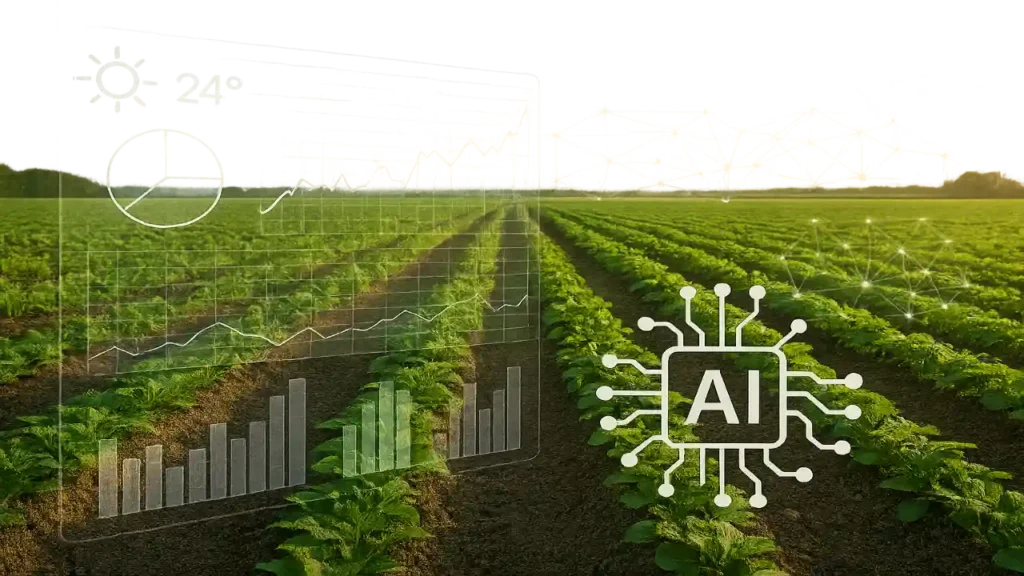
Agriculture has always been about experience, instincts, and hard work. For generations, farmers relied on weather patterns, soil feel, and seasonal knowledge passed down over time. But things are changing now. Slowly, quietly, and very practically, technology has started entering farms. And at the center of this change is artificial intelligence.
This how ai works in agritech industry essay is written for beginners—students, curious readers, or anyone who wants to understand the topic without complex technical language. I’ll walk you through how AI actually works in agriculture, step by step, just like explaining it to a friend.
No hype. No promotion. Just clarity.
Read Also : AI Agents for Real Estate: Automate Leads & Closings
Understanding Artificial Intelligence in Agriculture
Before diving into how AI works, it’s important to understand what artificial intelligence really means in farming.
Artificial intelligence in agriculture simply refers to machines and software that can analyze data, learn from it, and help farmers make better decisions. It’s not about robots replacing farmers. It’s about assisting them.
AI systems look at large amounts of information—like soil data, weather reports, crop images—and then suggest or automate actions based on patterns.
So when people talk about AI technology in farming, they’re talking about smart decision-making tools, not science fiction.
Why the Agritech Industry Needs AI
Agriculture today faces many real problems.
Farmers deal with unpredictable weather, rising costs, crop diseases, water shortages, and growing food demand. Managing all this manually is extremely difficult.
This is where the role of AI in agritech becomes important.
AI helps by:
- Reducing guesswork
- Improving accuracy
- Saving time and resources
This essay on how AI works in the agritech industry focuses on solving these practical challenges, not just explaining technology.
Step 1: Data Collection – The Foundation of AI in Agritech
Every AI system starts with data. Without data, AI cannot work.
In agriculture, data comes from many sources:
- Soil sensors measuring moisture and nutrients
- Weather stations tracking temperature and rainfall
- Drones and satellites capturing crop images
- Farm equipment recording field activity
This raw data is constantly collected from the field. It might look simple, but this step is the backbone of how AI is used in agriculture.
Without accurate data, even the smartest AI system becomes useless.
Step 2: Data Processing and Cleaning
Once data is collected, it’s usually messy.
Some readings may be incorrect. Some information may be missing. AI systems first clean and organize this data so it can be understood properly.
This step is quiet but critical.
In this phase, AI technology in farming:
- Removes errors
- Standardizes formats
- Organizes data into usable patterns
Many people skip this part, but in reality, this is where most of the work happens
Step 3: Machine Learning – Teaching AI to Think
Now comes the part where AI starts “learning.”
Machine learning allows AI systems to study past data and identify patterns. For example, AI can learn:
- Which weather conditions affect crop yield
- How diseases appear on leaves
- When irrigation improves or harms crops
This learning process improves over time. The more data AI gets, the better it becomes.
This is a core concept in every how ai works in agritech industry essay, because learning from data is what makes AI powerful.
How AI Is Used in Agriculture for Crop Monitoring
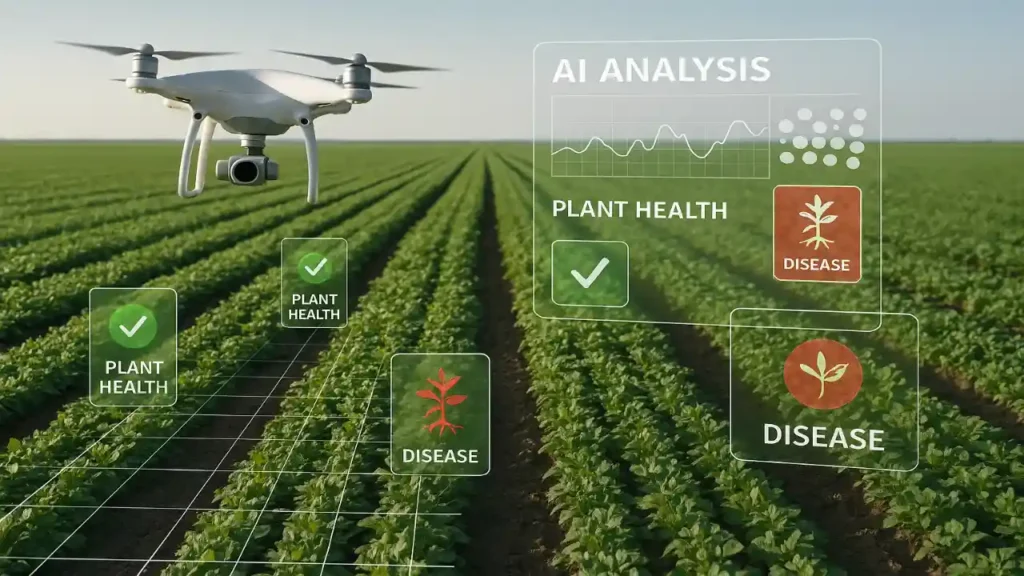
AI-Based Crop Health Analysis
One of the most common AI applications in agritech is crop monitoring.
Using images from drones or cameras, AI systems analyze crop health by detecting color changes, leaf damage, or unusual patterns.
This helps farmers:
- Identify diseases early
- Detect nutrient deficiencies
- Prevent large-scale crop loss
Instead of walking through large fields manually, farmers can rely on AI insights.
Early Disease and Pest Detection
Crop diseases spread fast. By the time symptoms are visible to the human eye, damage may already be done.
AI systems can detect tiny signs of disease early using image recognition. This allows timely action.
This practical use of artificial intelligence in agriculture saves both crops and money.
How AI Works in Agritech for Soil Management
Healthy soil is the base of farming.
AI tools analyze soil data to understand:
- Nutrient levels
- Moisture content
- Soil structure
Based on this, AI recommends:
- Which crop suits the soil
- When to fertilize
- How much water is needed
This is a simple but powerful example of how AI is used in agriculture to support better planning.
AI Technology in Farming for Precision Agriculture
Precision agriculture is one of the strongest outcomes of AI adoption.
Instead of treating an entire field the same way, AI allows farmers to manage small sections differently.
For example:
- More water where soil is dry
- Less fertilizer where nutrients are high
- Targeted pest control
This reduces waste and increases efficiency. That’s why the role of AI in agritech is growing rapidly in modern farming systems.
How AI Helps in Irrigation Management
Water is one of the most limited resources in agriculture.
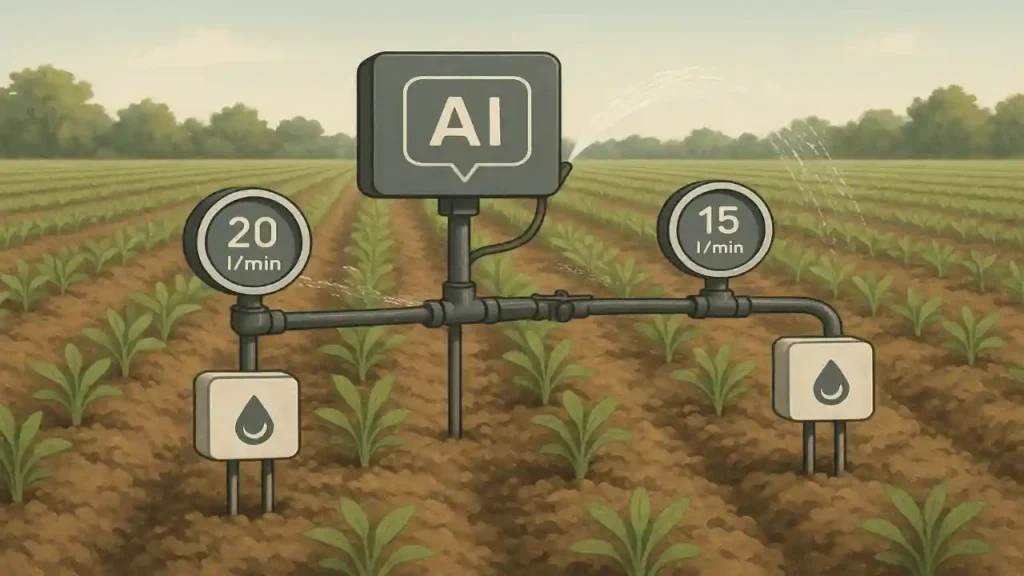
AI systems analyze weather forecasts, soil moisture data, and crop needs to decide:
- When to irrigate
- How much water to use
This avoids overwatering and underwatering.
In many regions, AI technology in farming has helped reduce water usage while improving crop health at the same time.
AI Applications in Agritech for Yield Prediction
Farmers always want to know how much they will harvest.
AI models use historical data, weather patterns, and current crop conditions to predict yield.
These predictions help farmers:
- Plan storage
- Manage supply chains
- Make financial decisions
This predictive ability is a major part of how AI works in the agritech industry in real life.
How AI Supports Decision-Making in Agriculture
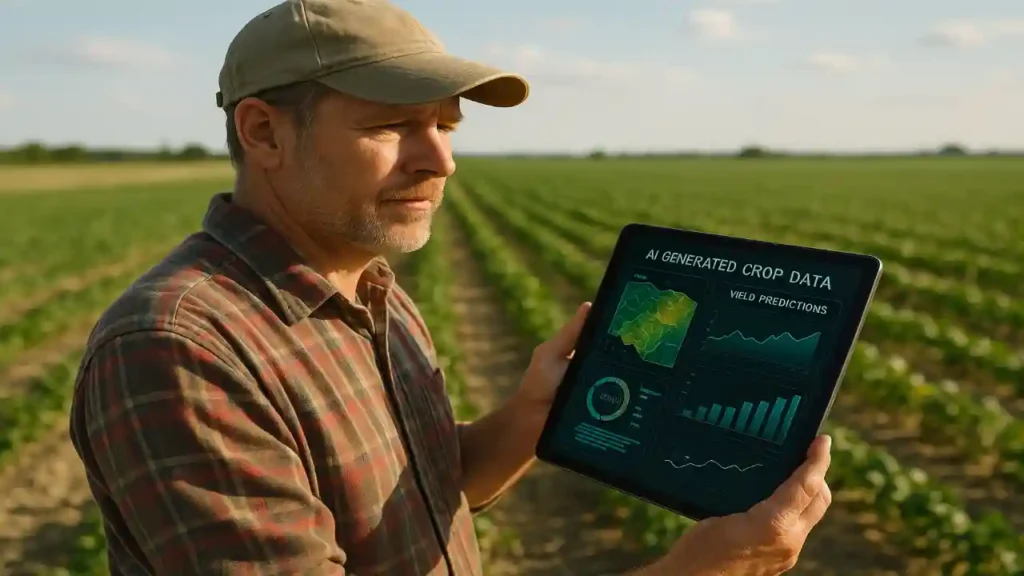
AI does not replace human judgment. It supports it.
Farmers still make final decisions, but AI provides insights that are difficult to calculate manually.
For example:
- Best time to plant
- Ideal harvesting window
- Risk of weather damage
This collaboration between human experience and AI intelligence defines the future of artificial intelligence in agriculture.
Challenges of Using AI in Agritech Industry
While AI has many benefits, it also comes with challenges.
Some common issues include:
- High initial costs
- Lack of technical knowledge
- Data privacy concerns
- Limited internet access in rural areas
A balanced how ai works in agritech industry essay must mention these challenges honestly.
AI is helpful, but it’s not a magic solution.
Future Scope of AI Technology in Farming
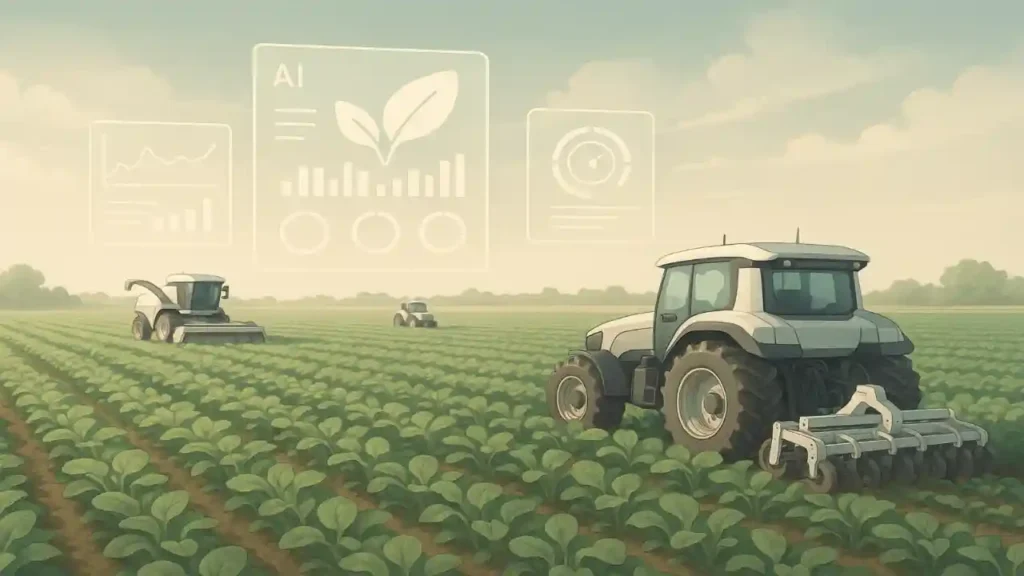
The future of AI in agriculture looks practical, not dramatic.
In the coming years, AI systems will become:
- More affordable
- Easier to use
- More localized for small farmers
We may see better climate adaptation tools and smarter resource management.
The goal is not automation for the sake of technology, but sustainability and food security.
Why Understanding How AI Works in Agritech Matters
Understanding how AI works helps people:
- Evaluate its real benefits
- Avoid unrealistic expectations
- Use technology responsibly
This essay on how AI works in the agritech industry aims to simplify the topic so that readers can form their own opinions.
Knowledge matters more than buzzwords.
Conclusion: A Practical View of AI in Agritech
To summarize, AI in agriculture is not about replacing farmers. It’s about supporting them with better information and smarter tools.
From data collection to decision-making, every step shows how AI fits naturally into farming workflows.
This how ai works in agritech industry essay explains that AI is a helper, not a hero. When used thoughtfully, it can improve productivity, reduce waste, and support sustainable agriculture.
The future of farming will depend on how well humans and machines work together.
FAQs
Disclaimer
This content is provided for informational purposes only. The information shared in this article is intended to help readers understand the topic and should not be considered professional, technical, financial, or agricultural advice. Decisions related to farming practices, technology adoption, or business planning should not be made solely based on this content. Readers are strongly advised to consult with qualified experts or professionals before taking any final decisions.

- GEO vs SEO: How AI Search Optimization Tools Increase Organic Traffic Beyond Google Rankings - January 23, 2026
- Why Use AI Search Monitoring Tools in 2026? (Benefits, KPIs & ROI With Examples) - January 22, 2026
- How to Improve Brand Visibility in AI Search Engines in 2026 - January 21, 2026