
Honestly Friends, in 2025 air purifiers have become a normal household item, but people still have the same old confusion — “how air purifier works exactly?” Sometimes I feel we use so much technology daily, but we don’t even know the basic logic behind it.
Like everyone knows their phone has a good camera, but what the sensor actually does… no idea. Same with air purifiers. We just turn it ON, the air feels a little lighter, and that’s it. But what happens inside, nobody explains properly. And online content feels too technical, almost robotic. That’s why this blog is written in a simple, human way, like how you and I talk while having tea.
Let’s see step-by-step in simple language how the air travels inside a purifier. This whole blog will explain the focus on how air purifier works.
Read Also : How AI Is Changing the World in 2025: Daily Examples
How Air Purifier Works — A Simple Breakdown
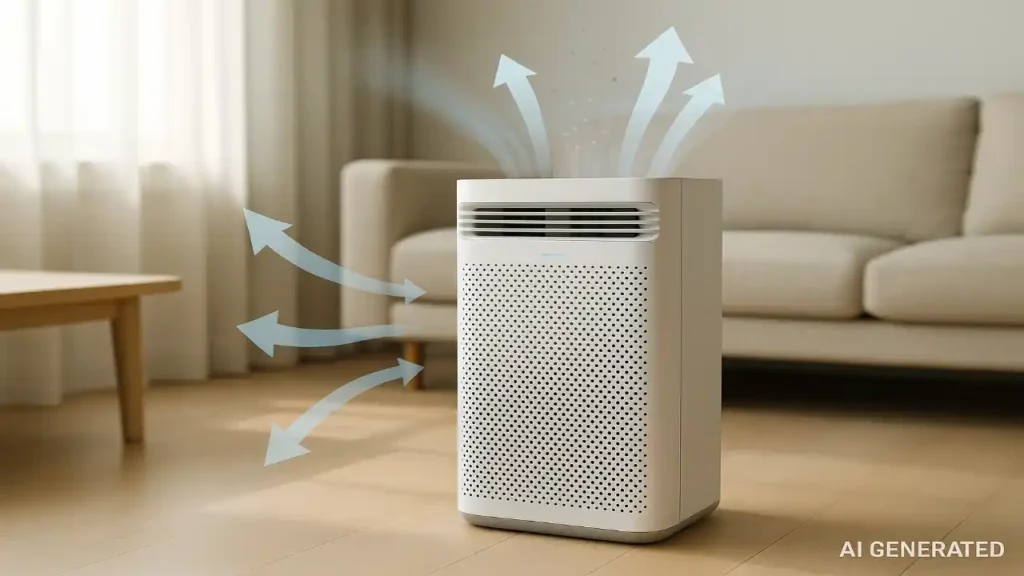
If I say it in one line, an air purifier follows a simple cycle: air goes inside → passes through filters → dust, smoke, and allergens get removed → clean air comes out. That’s it. But behind this, there is a full airflow system that pulls air, maintains pressure, and spreads it evenly. This whole process is so smooth that we don’t even feel the machine pulling air. That’s the real beauty.
The logic sounds simple, but when you understand the filters inside, you see that each layer has its own job. And this is why people often ask, “how does an air purifier actually work?” The simple answer is — it’s the teamwork of filters.
Air Purifier Working Principle — All About Airflow and Filters
The working principle of an air purifier is based on one thing: pulling air strongly and cleaning it through multiple layers. The fan does this job. The fan pulls air inside and sends it into the filter section where 2–4 layers are present. Each layer catches a different type of pollutant. At the end, clean air comes out.
You can compare it to RO water filters. RO filters water and an air purifier filters air. The only difference is that one uses water pressure and the other uses air pressure.
Types of Air Filters — What They Clean
This part is important because this decides whether your purifier is really useful or just moving air. And here the second common question gets answered too — “what does an air purifier remove?”
HEPA Filter — The Heart of an Air Purifier
HEPA filters catch tiny particles like PM2.5, pollen, dust, and pet hair. This filter can stop particles as small as 0.3 microns. That is around 1/100 the thickness of a human hair. Because of this filter, people trust air purifiers for home use. It is tested and reliable.
Activated Carbon Filter — Removes Smell and Gas
If your home has cooking smell, smoke, or paint smell, this filter helps. It absorbs smells and gas molecules. It works like a sponge that holds gases inside.
Pre-Filter — Small but Useful
A pre-filter is a simple mesh that blocks hair, big dust particles, and pet fur. This protects the HEPA filter and increases its life. It works like the first guard standing at the gate.
UV and Ionic Filters (Optional)
Some purifiers have UV light that helps kill bacteria and viruses. Ionic filters release ions. But these features are optional and not available in every model.
How Does an Air Purifier Actually Work? — Real-Life Example
Let’s understand with a simple example. Your room has dust, pollution, and maybe kitchen smell too. You turn ON the purifier. Now what happens?
First, the fan pulls air inside the machine. The pre-filter stops big dust. Then the HEPA filter removes PM2.5 and tiny dust. Next, the carbon filter absorbs smells and gases. Finally, the purifier releases clean air. This cycle keeps repeating until the room’s air becomes clean.
This is the basic air purifier working principle.
Do Air Purifiers Really Make a Difference?
Yes, they do. But in a realistic way. It’s not like turning ON the purifier will suddenly make your room feel like fresh mountain air. But in 10–20 minutes, you feel breathing becomes easier. The heaviness in the room reduces. Eye irritation goes down. Allergies reduce.
A purifier just cleans air, it doesn’t do magic. But if used regularly, the long-term effect is very good. People with allergies notice this quickly.
Air Purifier Airflow System — How It Works
Airflow means controlled movement of air. If the purifier does not pull air at the right speed, the filters won’t work well. A strong fan means the room gets purified faster. That’s why CADR value matters. High airflow = fast cleaning.
If the room is big and the purifier is small, the machine will struggle all day. So the airflow system must match the room size.
Air Purifier Efficiency — How Effective It Is
Efficiency depends on:
- Filter quality
- Fan speed
- Room size
- Maintenance
- Seal leakage
A good purifier shows difference in 15–30 minutes. If filters are dirty, efficiency becomes half. That’s why cleaning and replacing filters is important. Many people ignore this and then say the purifier doesn’t work.
How to Choose the Right Air Purifier — Most Important Part
This part is useful because most people make mistakes while buying.
Check Room Size
The purifier’s CADR should match the room size. Don’t use a small purifier in a big room.
HEPA Filter is a Must
If there is no HEPA filter, don’t buy it.
Carbon Filter If Smell Is More
For cooking smell, smoke, or pet smell, carbon filter is important.
Check Noise Level
At night, you need peace, not extra noise. Lower noise is better.
Maintenance Cost
Filters should be affordable. Otherwise, long-term cost goes high.
Conclusion — Air Purifier Is Simple, You Just Need to Understand
If you ask in one simple line how air purifier works, the answer is: it pulls air, filters it, and releases clean air. But the system behind this is smart. It is a mix of airflow and filters that keeps your room’s air better.
An air purifier is not magic, but a simple and smart machine that makes life easier. If you pick the right purifier and take care of it, you will surely feel the difference.
FAQs

- GEO vs SEO: How AI Search Optimization Tools Increase Organic Traffic Beyond Google Rankings - January 23, 2026
- Why Use AI Search Monitoring Tools in 2026? (Benefits, KPIs & ROI With Examples) - January 22, 2026
- How to Improve Brand Visibility in AI Search Engines in 2026 - January 21, 2026